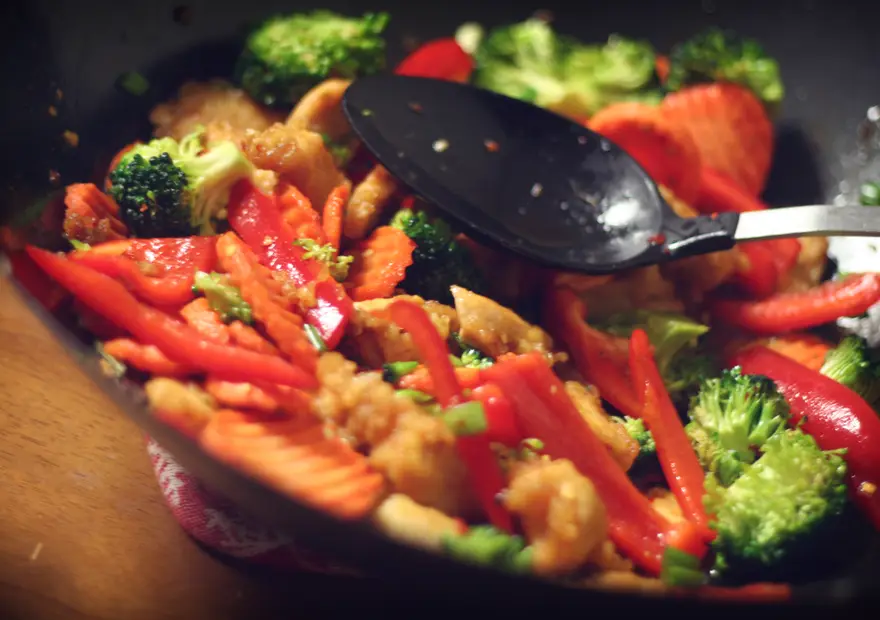
Skinless chicken breast is the default protein of calorie counting for arithmetic reasons: the highest protein per calorie of any common meat. The USDA entry here is the cooked, skinless breast — raw values run lower per 100 g because cooking drives off water and concentrates everything. Add the skin back and the same 100 g climbs by roughly a third; that single choice is worth more than most sauce decisions.
Chicken breast calories by portion
| Portion | Calories | Protein | Carbs | Fat | Fibre |
|---|---|---|---|---|---|
| 1 piece (196 g) | 296 | 59.8 g | 0.0 g | 6.3 g | 0.0 g |
| 100 g | 151 | 30.5 g | 0.0 g | 3.2 g | 0.0 g |
| 1 oz (28 g) | 43 | 8.6 g | 0.0 g | 0.9 g | 0.0 g |
| 2 servings (392 g) | 592 | 119.6 g | 0.0 g | 12.6 g | 0.0 g |
One serving is 14.8% of a 2,000 kcal reference day. Sodium: 102 mg per serving (52 mg per 100 g).
Where chicken breast's calories come from
Of the energy in chicken breast, about 81% comes from protein, 0% from carbohydrate and 19% from fat (Atwater factors: 4, 4 and 9 kcal per gram). That split explains how the food behaves: protein-led foods anchor a meal and protect muscle in a deficit. At 151 kcal per 100 g it sits in the moderate band of the food calorie chart, alongside the foods in the comparison below.
Where chicken breast sits in its group
Within the Protein group of this database (39 foods), chicken breast ranks #15 of 39 by calorie density — the group runs from egg white at 52 kcal per 100 g up to bacon at 393, with a middle value around 178. That puts it on the lighter side of its group: a natural building block when the plate needs volume. To log it alongside the rest of the day, open the free calorie counter and search “chicken breast” — servings or exact grams, both priced from this same USDA entry.
Chicken breast compared with similar foods
| Food (Protein) | kcal / 100 g | kcal / serving |
|---|---|---|
| Chicken breast | 151 | 296 |
| Egg | 155 | 78 |
| Ham | 157 | 220 |
| Catfish | 144 | 206 |
| Rotisserie chicken | 144 | 553 |
| Rainbow trout | 168 | 119 |
Log chicken breast in the free app →
Chicken breast questions
How many calories are in chicken breast per 100 g?
151 kcal per 100 g, from USDA FoodData Central entry “Chicken, broiler or fryers, breast, skinless, boneless, meat only, cooked, grilled” (FDC ID 171534). Per ounce (28 g) that is 43 kcal. The 100 g figure is the one to compare foods with — servings vary, density does not.
How many calories are in one serving of chicken breast?
296 kcal for 1 piece (196 g) — about 14.8% of a 2,000 kcal day. That serving also gives 59.8 g protein, 0.0 g carbs, 6.3 g fat and 0.0 g fibre.
Is chicken breast good for weight loss?
It depends on the role it plays. At 151 kcal per 100 g, chicken breast counts as a moderate food, with 0.0 g of fibre and 30.5 g of protein per 100 g. Foods in this density range are the easy ones in a deficit — you can eat a satisfying amount before the calories become the story, especially when the rest of the plate is built deliberately. The note above puts its specific case.
How much protein, carbs and fat are in chicken breast?
Per 100 g: 30.5 g protein, 0.0 g carbohydrate and 3.2 g fat — which works out to roughly 81% of its energy from protein, 0% from carbs and 19% from fat (using 4/4/9 kcal per gram). Per serving (196 g): 59.8 g protein, 0.0 g carbs, 6.3 g fat.
Source: USDA FoodData Central (SR Legacy), “Chicken, broiler or fryers, breast, skinless, boneless, meat only, cooked, grilled”, FDC ID 171534 — public-domain US government data. Values are for the generic food as described; brands and preparations vary.